Crosson’s Creek: A Camp for Children With Disabilities
Marketing Overview
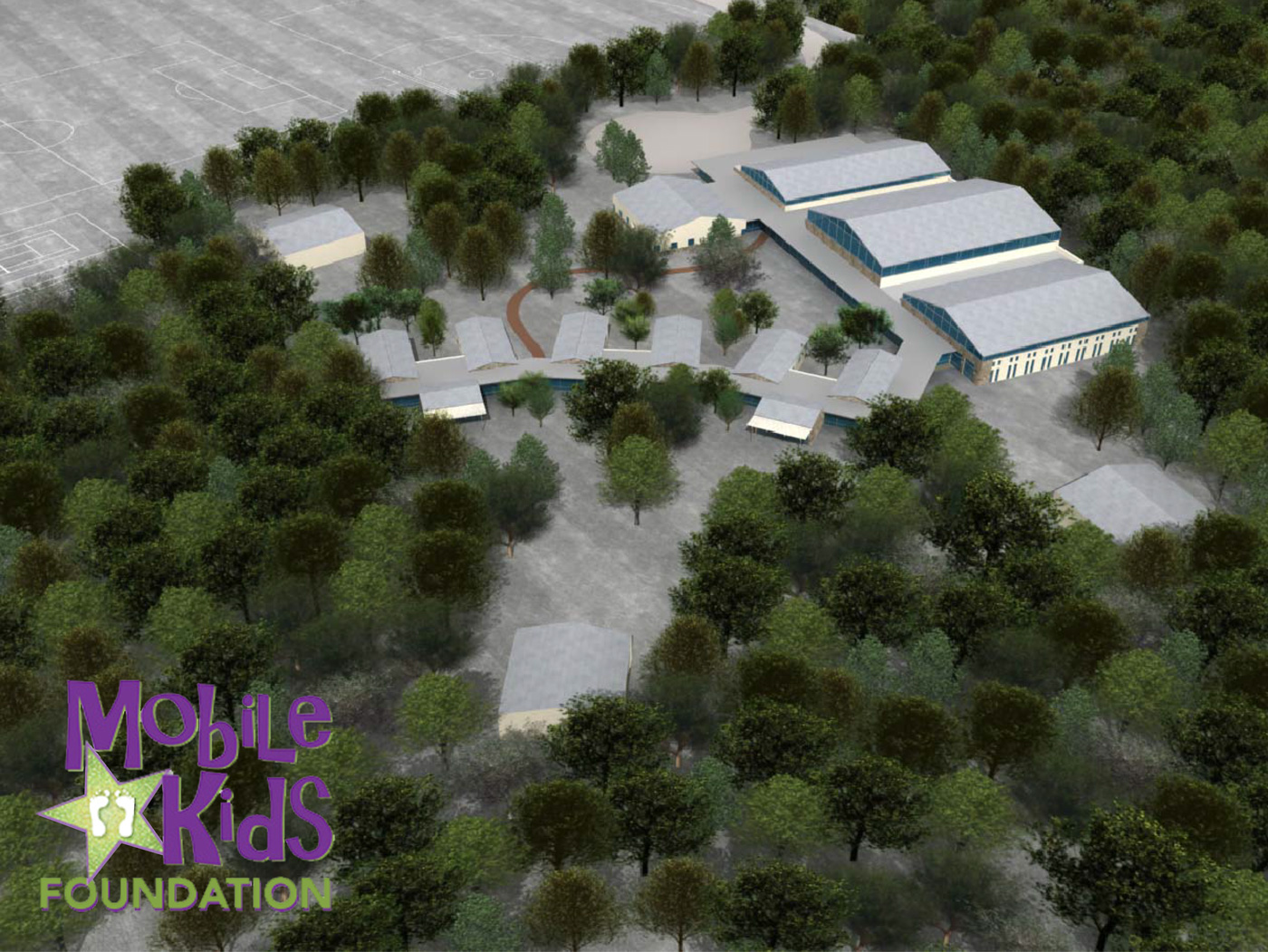
The concept is a camp that is 100% American Disability Act (ADA) standard compliant, this will allow the camp to be utilized by a wide variety of disabled children, including those that are wheelchair bound, blind, deaf and those who deal with epilepsy.
The camp will incorporate into its activities a designed curriculum that provides both the physical features of a camp environment – hiking, basketball, baseball, nature, swimming, horseback riding, fencing and nightly campfires as well as personal development programs, i.e. nutrition, computer skills, cooking skills and self-sufficiency.
The facilities and programming will be designed to work within a defined handicap group to ensure that all children can participate in all activities.
The proposed camp has been defined as “transformational” because it will be the first totally ADA standard built facility for children in all categories of disabilities. Its character of operating year-round will also provide children with unique camping experiences, found today only with targeted group programs.
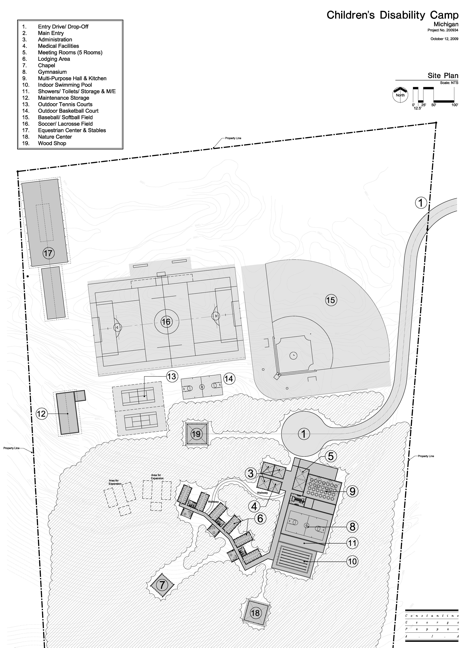
The camp’s targeted footprint will be approximately 100 acres. With a designated greenbelt along its perimeter to provide the sense of outdoors and privacy to the activities within the camp.
The development will strive to be 100% energy efficient through the utilization of alternative energy program(s) in wind, solar, battery and waste gasification. These program(s) will be in conjunction with The Mannik Smith Group, Detroit, Michigan.
The camp will incorporate a wastewater treatment system that allows the reintroduction of processed water back into the natural aquifer. Where applicable, it will utilize a comprehensive capture, filter and re-use system for all water runoff throughout the development. The development will utilize the existing natural grasses, flowers and greenery with minimal sod programs.
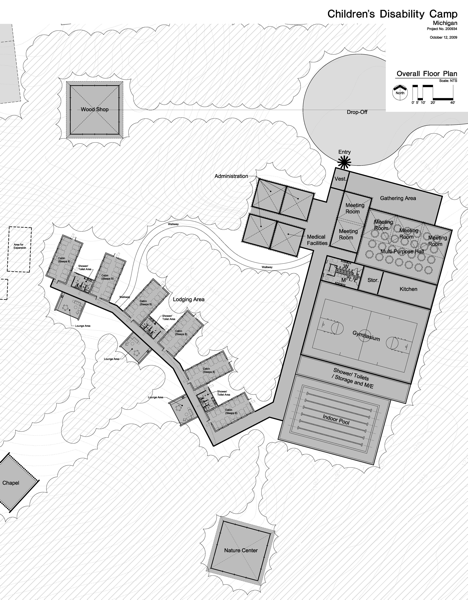
The facilities will include the following support structures:
- Administrative Building
- Lodging Accommodations that are expandable and able to eventually handle up to 340 campers and support personnel
- Design elements within the Lodging to include common areas for games, relaxation, cafeteria, meeting rooms and medical facilities
- Equestrian Center
- Swimming pool – adopted to handle wheelchairs
- Year-round playfield for baseball, basketball, soccer, Lacrosse and general play area
- Stand-alone arts & crafts center
- Nature center and trails
- Chapel
- Support Activity Buildings.

Camp Programming Learning Programs
- Nutritional Education – program will consist of two parts:
- Health Education regarding foods and caloric intake requirements for children with handicaps created in conjunction with local hospital group; emphasis on intuitive eating and how to incorporate a variety of foods within a structured meal program, discussion of how to establish positive body image and acceptance.
- Practical gardening skills developed in conjunction with Recovery Park an urban farming non-profit located in the City of Detroit. This program will have a three-quarter acre hi-top greenhouse with dirt based growing and hydroponic growing capabilities.
- Cooking Skills – developed with local chefs; will focus on ingredients, flavor profiles for seasoning, actual cooking skills developed in a kitchen setting designed for all handicap groups. We will utilize our produce from our gardening project from on our campus which will also reinforce our nutritional education program.
- Health Education – the how’s and why’s of good hygiene and how to develop good habits for a daily health program. Education on making positive physical, social and sexual choices. Programming for positive self-esteem, positive mental health lessons with suicide prevention and grief focus. Curriculum on substance abuse and preventions skills workshops.
- Fitness, Wellness and Recreation – the need for exercise for a healthy lifestyle. We will work with local therapy and exercise groups to develop specific exercises for the children. Examples: chair exercises, soccer, kickball tennis.
- Yoga– can beneficial for individuals with disabilities or chronic health conditions through both the physical posture and breath work. Each pose can be modified or adapted to meet the needs of the individual. Yoga ananas can be performed seated in a chair or wheelchair. Mindfulness and meditation help the individual become more in tune with their inner self and reduces depression, anxiety and feelings of panic.
- Motor Skill Training – hand-eye coordination skills for development of dexterity and strength skills.
- Astrology – part of the night activities for the Tree House.
- Woodcarving – an extension of the hand-eye training program will be developed for all handicap groups including the blind.
- Art Therapy – programming tailored to empower disabled participants, encourage exploration of personal problems through a alternative communication method. Help develop emotional, behavioral and learning skills through self-expression.
- Music Therapy – intervention to improve functioning of social skills, communication, cognition, motor development, sensory integration and emotional regulation through music and its execution.
- Occupational Therapy
Activities
- Swimming – indoor pool: open swimming, exercises, volleyball, water polo, basketball. Note: need to develop a life jacket with less constriction and a plastic wheelchair.
- Swimming – outdoor/lake: open swimming, exercises, volleyball, water polo, basketball.
- Water Activities – kayaking, paddleboats, fishing, paddleboards, wind surfing.
- Activity Field (artificial turf) – baseball, basketball, fencing, football, track and field events.
- Wood Shop – includes derby car making and race, woodcarving with program designed for the blind.
- Mechanical Shop
- Electronics Shop
- Graphics and Craft Shop
- Astrology from the Tree House
- Zip Line
- Rock Climbing
- Outside Pavilion Activities – plays, concerts, camper designed programs, movies.
- Camp Fires
- Nature Walk
- Obstacle Course
- Recreation Center – pool, billiards, card games, board games, controlled video games, movies.
- Gun Safety and Target Shooting – BB guns
- CSI investigation – crime scene investigation: how to collect evidence, process it and dust for fingerprints.
- Color Wars – field games and activities for competition between groups of campers.
Camp will have a full Emergency Room Medical site sponsored by a local hospital group.
The Mobile Kids Foundation is working with Innovation Emporium, a company that specializes in custom-designed educational and developmental curriculums for grade, middle and high school students. They will coordinate and develop programs for each of our camping categories and link them with the Michigan Educational Association accredited curriculums.
We also will be creating permanent internship programs with five (5) public universities. This will allow a minimum of five students to earn tuition-paid college degrees while obtaining real-world experience. The internships will be linked directly to the children disabilities that are part of the Children’s Disability Camp.
The programs will be designed to operate 12 months of the year, thus providing a camping experience that will be designed for each of the seasons and activities associated with that season.
The Mobile Kids Foundation is working with Hartsook a National Development Firm for its capital campaign and ongoing Operating Endowment fundraising activities. The initial activities will focus on raising the $16.5 million for the site development and Phase-One build-out of the camp. The fundraising program will be conducted on a National Basis. When completed, a fundraising plan will be put into place to provide a permanent Operating Endowment Fund. The income from this fund will be utilized to offset operating costs of the facilities.
The project development is a 14-month design and construction timetable.
Our target clients/customers
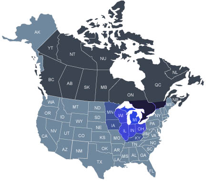
Michigan’s residents – along with those of nearby states and Canada
The proposed primary service market is defined as the Midwest; this covers Michigan, Wisconsin, Illinois, Indiana, Ohio, Pennsylvania and parts of Canada.
Prevalence
Ages five to 15 years.
Introduction
This section focuses on the prevalence of disability among non-institutionalized children ages 5 to 15 in the United States, using data from the 2012 American Community Survey (ACS).
 Quick Statistics
In 2012, the overall percentage (prevalence rate) of children with a disability ages 5 to 15 in the US was 5.3 percent. In other words, in 2012, 2,393,300 of the 45,411,700 individuals ages 5 to 15 in the US reported one or more disabilities.
In the US in 2012, among the five types of disabilities* identified in the ACS, the highest prevalence rate was for “Cognitive Disability,” 4.0 percent. The lowest prevalence rate was for “Hearing Disability,” 0.6 percent.
Prevalence: Ages 5 to 15 years 5.3%
2012 Disability Status Report – United States | © 2014 Cornell University
United States Summary
These statistics indicate the social and economic status of non-institutionalized people with disabilities in the United States, using data from the 2010 American Community Survey (ACS).
Age: In 2010, the prevalence of disability in the US was:
- 11.9 percent for persons of all ages
- 0.8 percent for persons ages 4 and under
- 5.1 percent for persons ages 5 to 15
- 5.4 percent for persons ages 16 to 20
- 10.3 percent for persons ages 21 to 64
- 25.5 percent for persons ages 65 to 74
- 50.5 percent for persons ages 75+
Disability Type: In 2010, the prevalence of the six disability types among persons of all ages in the US was:
- 2.1% reported a Visual Disability3.4% reported a Hearing Disability6.8% reported an Ambulatory Disability
- 4.8% reported a Cognitive Disability
- 2.6% reported a Self-Care Disability
- 5.4% reported an Independent Living Disability
Gender: In 2010, all ages, reporting disabilities in the US:
- 12.2 percent of females of all ages
- 11.7 percent of males of
Hispanic/Latino:
- Hispanic or Latino origin in the US was 8.1 percent.
Race: the prevalence of disability for working-age people (ages 21 to 64) was:
- 10.2 percent among Whites
- 13.8 percent among Black / African Americans
- 4.1 percent among Asians
- 17.3 percent among Native Americans
- 9.3 percent among persons of other race(s)
2012 Disability Status Report – United States | © 2014 Cornell University
Competitors
Adventure Camp, Inc. – Middleburg,Virginia
Young amputees between the ages of 6 and 18 can enjoy camp and challenges for four days. Activities include swimming, fishing, hiking, volleyball, horseback riding, zip wire, ropes course and wall climbing, just to name a few. www.adventurecampinc.org.
Wonderland Camp – Rocky Mount, Missouri
People of all ages and disabilities are welcome at Wonderland Camp. The mission of Wonderland Camp is to provide a fun, educational camp experience for people with mental and physical disabilities, to offer a respite from daily care giving for family members and healthcare workers, and to provide and nurture a personal development experience for volunteers and staff. www.wonderlandcamp.org.
Congenital Hand Camp – Hands to Love Starke, Florida
Hand Camp is a weekend camping experience for children who have upper limb differences and their families. It provides an opportunity for children to try new exciting activities, to interact with others, and to just be a kid. The camp is currently held one weekend a year at Camp Crystal Lake in Starke, Florida. The camp also provides opportunities for parents to network and share their experiences. The Camp was started by Dr. Paul Bell, and two hand therapists, Ruthie Dell and Ginger Sterna. Hands to Love provides a way for medical professionals, families, and children with limb differences to learn and grow. www.handstolove.org.
Aerie Experiences – Play with a Purpose Dahlonega, Georgia
Special Needs Camp: ADHD, Aspergers, Autism, Learning Disabilities We offer experiential, adventure-based, wilderness and therapeutic activities for children, individuals and families navigating Neurobiological Disorders, Aspergers, High Functioning Autism, Learning Disabilities and other special needs. Locations: Georgia, North Carolina, South Carolina, Tennessee
Camp Okizu – Northern, California
Summer camp offering the opportunity for children with cancer to learn independence, nourish positive self-esteem and gain skills they never thought were possible. “The mission of the Okizu Foundation is to provide recreational, respite and peer support programs to meet the needs of all members of families
affected by childhood cancer.”
These camps are a representative sample of Camps designed for Specific Special Needs for children. Our camp differentiates itself from other camps in two ways: 1. It is 100% American Disability Act compliant which allows any child with any disability to enjoy the experience and activities of Crosson’s Creek; 2. It is designed to operate year-round providing additional winter educational and activity experiences that are quite different from a warm weather camp program.
Our long term objective is provide an environment where every child with any disability can learn, grow and experience those programs and activities where they have fun.
“Where every child has the right to play”
The Marketing Plan will utilize a full complement of strategic tactics that will be implemented for the promotion of Crosson’s Creek prior to and after opening. To augment the budget and effectiveness of the campaign, we will seek to partner with Foundations and Specific Non-Profits that focus on the disability service programs for children from the ages 5 thru 15 and pursue matching funds and co-op advertising or promotional opportunities to support the camp’s marketing efforts.
Some of these tactics maybe revised once the project is site specific. The following summary provides an overview to this strategic approach.
The marketing program for Crosson’s Creek will begin 14 months prior to opening, with a heavy awareness program that educates families with the camp’s amazing features. From the Tree House to the Zip Line, Crosson’s Creek is more than a typical camp; it is an experience. This experience will become the positioning and the heart of the marketing effort.
Initial marketing will begin with a media blitz. DBA Worldwide, our media agent, has a strong media and public relations team with local, regional and national contacts that include USA Today, The Wall Street Journal and Newsweek. Our regional relationships with WJR-AM 760, one of the most powerful radio stations in the nation, and WXYZ-TV 7, one of the top television affiliates in the country, also will be incorporated into the announcement of the impending opening of the camp. The early media announcements will be matched by a grass-roots PR campaign that will build interest and excitement across Michigan and the surrounding recreation markets.
The camp’s year-round operations provide strong marketing opportunities as well. For example, the winter developed programs and activities will provide new, attractive options for snowbound Michigan families – while also generating revenue for the camp.
Activities will include cross-country skiing, snowboarding, sleigh rides, nature hikes skating and ice fishing programs.
National and Regional Promotions
With its all ADA Compliant programming, unique year-round activities and green friendly development, Crosson’s Creek is a revolutionary children’s camp. It demands a national rollout. Using our regional and national contacts, we will develop a comprehensive introduction of the camp, including remote broadcasts by Good Morning, America and The Today Show. We will also schedule these remotes to be repeated during the winter months, which will be an interesting angle for these national broadcasts. Various media angles will be developed to promote the camp nationally. Recreation trade journals, engineering, science, and environmental magazines will be approached for placement of articles, giving the camp free national media attention. Publicity angles will include announcements of the camp’s development and construction partners, as well as, stories about the environmentally friendly design of the camp.
School Outreach
Schools across Michigan will provide a significant promotional and visibility opportunity for the camp. The camp’s marketing dollars can be extended by incorporating a field trip-based experience for elementary, middle-school and high-school children. Schools and teachers in school districts coping with shrinking budgets are particularly interested in discovering meaningful experiences for their students that are cost-neutral. Often, the cost of bus transportation is a significant barrier to participation by these students and the districts least capable of supporting enriching experiences are more likely to be serving populations of disadvantaged students. A subsidized experience for students would be well-received by teachers in these districts, particularly if it is combined with an educational experience. Once an overall transportation program is arranged, field trips can focus on the camp operations, environmental innovations and management structure, all of which provide fascinating learning environments for visiting students.
DBA Worldwide will enhance the impact by arranging for teacher-chaperoned groups of students to receive photographs documenting their visit to this special place so that students could share their experiences with friends and family. DBA Worldwide is experienced as a national leader in incorporating field-trip experiences for schools and students. The Michigan Tech University YES! Expo at Ford Field, which we produced, had upwards of 20,000 students from schools across Michigan and Ohio, so we are very familiar with the logistics and challenges and successes of including schools in an activity of this caliber.
Already, Crosson’s Creek has established a commitment to education. The camp is working with the Michigan Educational Association to create accredited curriculums for grade, middle and high-school students in the areas of math, science, engineering, environmental sciences and design.
Crosson’s Creek is also working with five of Michigan’s major public universities to create permanent internships for college degrees in the Human Health and Services area.. This will allow students to earn tuition-paid college degrees while obtaining real-world business experience.
Environmental Marketing! Green is Fun!
Crosson’s Creek will be considered a “green camp”, which is good not only for the environment but for our marketing efforts. The proposed development will have a goal to become 100% energy self-sufficient through the use of alternative energy sources in wind, solar, battery and waste gasification. The water treatment system is designed as an activated sludge system to provide a “net zero” impact on the local water table. The development also will incorporate waterless flush systems, initially estimated at 100 units, which will provide an annual savings of 40,000 gallons of water per unit or 4 million gallons per year. It will also employ a comprehensive capture, filter and re-use system for all water run-off throughout the development. Wherever possible, natural grass, flowers and greenery will be used in lieu of major sod programs. Together, these environmental features will provide tremendous promotional and publicity opportunities for the marketing of the camp.
Seasonal Activities
The park’s year-round operations provides strong marketing opportunities as well. OctoberFest that encompasses the entire month of October. Cider and doughnuts with hayrides. Christmas events during the entire holiday season. Sleigh rides, snowboarding, cross-country skiing, ice fishing and a winter carnival complete with ice sculptures.
As the park moves into Spring and Summer all of the traditional camping activities transform the camp into an idyllic playground.
Key Differentiators
Primary differentiator is Crosson’s Creek Camp is a 100% American Disability Act compliant camp that will be able to work with all levels of handicapped children.
Our Legal Structure
Crosson’s Creek Camp is a for profit organization owned by the Mobile Kids Foundation a 501(c)3 Non-profit organization organized in the State of Michigan
The Mobile Kids Foundation was incorporated on February 25, 2005. As of October 21, 2106, Crosson’s Creek Camp is under development and has no assets.
Our accounting is handled by Richard M. Mast, C.P.A. b.
Our accreditation is through the State of Michigan
Contact Information:
Clearview Financial Partners, PLLC
2434 Devon Lane Birmingham, MI 48009
(248) 227-0772|
rmastcpa@yahoo.com
Use of Proceeds
Funding of the Development Capital Budget will provide the funds to secure the camp site, provide preliminary engineering, design concepts and support the approval process. Construction funding will be used for the actual build out of the camp.
Previous Fund Raising Initiatives
Currently working with Russ Russell, RW Russell and Associates, LLC a National Fundraising Firm to finalize the business plan. We will formally start fundraising when Crosson’s Creek becomes site specific.
Mobile Kids Foundation has no short-term debt, nor long-term debt.
More than 95% of all funds raised will be used to buildout the camp. Less than 5% of funding goes to payroll.
Crosson Creek Camp has no outstanding credit lines with any banks or financial institutions, and are not personally guaranteed on any business debts.
Long-term Vision for the Company:
13 – 36 months: To develop a camp and learning center that will accommodate up to 1,000 campers per week.
Competitor Entry Assessment
There is moderate “friction” for competitors to enter this market. Project development requires long lead-time for design and concept. The construction is an approximate 14-month to 16-month timetable. 
Personnel
Patrick R. Crosson
Executive Officer and Director
 Founder of Crosson & Company, a consulting firm focused on defining, designing, implementing financial services and technology-related solutions for a variety of companies. Patrick’s business restructuring, development, merger and acquisition experience complements an MBA in Finance. Over 30 years in the banking and financial industries, coupled with an entrepreneurial spirit that has started and sold several businesses over his career. Looking to continue to work with cutting edge companies that provide new products and innovations within their industries.
Russ Russell
President at RW Russell and Associates LLC
A passion for making a difference has defined Russ’ fundraising career since he began in 1981. From the start, he helped build funding capacities as a leader in integrated strategies and major gift development that catapulted organizations to new heights. Russ was responsible at Forgotten Harvest in becoming America’s largest Food Rescue Relief organization adding over 90,000 new donors in less than three years with new brand awareness, elevating the organization’s position in the community with an integrated marketing strategy that included media, cause related marketing, earned media, direct mail, major gift and foundation support. The operating budget expanded from $3 million annually to nearly $10 million in three short years. In addition Russ served three divisions as the Executive Director of Development for The Salvation Army in Phoenix, Philadelphia and Detroit with record-breaking results. In his 17 years at Salvation Army, Russ led many efforts including record-breaking results nationally in disaster fundraising with $8 million collected in 2005-6 and in 2007 nearly $2.5 million was generated in the largest one day radiothon with Dick Purtan and WOMC FM radio in 2007.
DBA WORLDWIDE (DBA)
Primary Responsibility: Advertising, media production and media strategies
 Working in coordination with Management Resources and Jack Rouse Associates, DBA will be the marketing and promotions agency for the park. DBA is a non-traditional marketing and advertising agency that owns the registered trademark on the term “entertainment-based marketing.” Through the integration of entertainment strategies into new digital and community environments, DBA has had a part in redefining media marketing. Using new tools that will segment audiences on specific analytics and metrics including family, faith and new media culture, this team of marketing professionals will be an integral part of the marketing team. Related client experiences include Hollywood studios, Michigan museums, municipalities, raceways and tourism entertainment venues from national resorts and arcades to airlines and airports.
DBA is not simply an advertising and entertainment agency, but a strategic marketing partner for its clients. With its Axiom Entertainment initiative, DBA has become the leading firm that has experience in creating companies and initiatives that lead the world in merging branding with entertainment. 
Lead Team Member:
Daniel Brian Cobb
President, Daniel Brian & Associates/Axiom Entertainment
Daniel is a 17 time Emmy Award winning director, producer, marketing strategist and founder of several successful marketing and entertainment companies including the “Greater Detroit Future 50” company, Daniel Brian & Associates Advertising. DBA achieved top 25-agency status before its 10th year and is currently ranked among the top 15 advertising agencies in metro Detroit by revenue, and ranked among the top 5 for regional media initiatives. Daniel has been featured among the “40 under 40” executives in Metro Detroit by Crain’s Detroit Business. Daniel has been represented by the Creative Artists Agency in L.A., the same agency that represents Steven Spielberg and Arnold Swartzenegger.
Some of Daniel’s projects include: Development of the Paramount & AxiomTV distribution campaign; Dave Coulier’s Clean Guys of Comedy following the successful series, “Full House;” Creator of the vision for the Henry Ford Museum of Medicine, branded experience as well as branded environmental campaigns for the Citizens 400 at the Michigan International Speedway; rebranding Holiday Inn 4-star resorts to become Crowne Plaza; promotional campaigns for Continental Airlines and the launch of the new wing at Metro Detroit Airport. Additional information is available at www.dbaworldwide.com
Effects of Changes in the Marketplace
“Recent trends in Michigan look broadly similar to national trends,” according to Dana Johnson, Chief Economist at Comerica Bank. “Both the national and the state economy appear to be expanding at a moderate pace. For Michigan, the evidence is growing that the structural adjustments in the auto sector are slowing.” The economy is on the “up-swing” in Michigan, the economic indicators show that this should have a positive impact on the state’s ability to support a successful tourism industry.
Is the business transportable from state to state?
The Out-0f-State Opportunity: In addition to current visitors and Michigan residents, more than 87 million people live on the outskirts of Michigan in the Midwest and Canada. This provides a significant extended audience for marketing efforts an audience that already plans to spend money on Midwestern activities. f. There are no restrictions in doing business across state lines.
Environmental Issues
It appears that the proposed site does not have any environmental issues. A Phase 1 Environmental Impact Study will be done to determine if any remediation is required.
Subscriptions and Recurring Revenues
There will be no revenues from subscriptions. We anticipate that we will be recurring revenue from campers estimated at 60% of annual revenues.
Special Licenses and Certifications
The State of Michigan requires registration as a camp. We require licensing for the care and treatment of children with handicaps.
Other Risks
To remain competitive we must continue to enhance and improve the ease of use, responsiveness and introduce new programs, services and technologies, which will require us to update or modify our technology and designs. Developing and integrating new products, services or technologies into the camp and overall site could be expensive and time consuming. Any new features, functions or services may not achieve market acceptance or enhance our brand loyalty. We have not completed development and testing of certain of our proposed site features. If we fail to develop and introduce or acquire these features or other new features, functions or services effectively and on a timely basis, we may not continue to attract new visitors and may be unable to retain our initial visitors. We may not succeed in incorporating new concepts and technologies, into our plan, if not, we may incur substantial expenses.